
New York County Criminal Court Cases
New York County criminal court cases do not all stay with one clerk. New York City Criminal Court at 100 Centre Street arraigns virtually all Manhattan criminal arrests. It also hears misdemeanors, violations, and felony matters before indictment. If a grand jury returns an indictment, the felony proceeds in New York State Supreme Court, Criminal Term. Supreme Court operates at both 100 and 111 Centre Street. This split explains why an early felony may have a Criminal Court docket number, then gain a Supreme Court indictment number.
The court clerk maintains the case file, not NYPD, NYC DOC, or the District Attorney. Clerk records track the formal charge, calendars, motions, court orders, plea or trial result, and sentence. Police reports and custody entries are separate records. Someone tracing a New York County case should identify both its court and its stage before requesting a document.
Manhattan Criminal Docket to Indictment
A felony complaint can remain in Criminal Court while prosecutors review the facts and seek grand-jury action. During that period, the Criminal Court docket is the useful identifier. An indictment shifts the case to New York County Supreme Court and an indictment number becomes central. A misdemeanor normally remains in Criminal Court. The New York County District Attorney prosecutes the case, but court clerks preserve the public docket and issue official disposition certificates.
This path also helps when a search appears incomplete. A person may find an arraignment under one number and later appearances under another. Check the court name, case status, next appearance, and number shown on each result. Do not treat the arrest charge as the final filed charge. Prosecutors may change counts before or after arraignment, and the docket records those formal changes.
Record path: Charges Filed › Arraignment › Pretrial › Plea or Trial › Disposition › Sentencing
Searching New York County Case Records
eCourts WebCrims is the free first stop for pending cases and future appearances. It is not a complete archive. The paid OCA Criminal History Record Search, or CHRS, reports qualifying public pending and conviction cases statewide through an exact name and date-of-birth search. A clerk search is still needed for detailed documents, an older file, or certified proof.
- Open WebCrims and choose the defendant-name or case-identifier search route.
- Enter the legal first and last name, then narrow to New York County and the correct criminal court when that control is available.
- Record the docket or indictment number, court part, next date, and appearance purpose from the matching result.
- Use CHRS for a broader public statewide history when an exact name and birth date are known. Each spelling or alternate birth date is a separate paid search.
- Contact the original New York County court clerk for inspection, copies, archives, or a certificate of disposition.
| Field Label | Type | Required | Notes |
|---|---|---|---|
| Search mode | Tab or option | Yes | Choose Defendant Name or a case identifier route. |
| Last Name | Text | Yes for name search | Use the legal spelling. |
| First Name | Text | Yes for name search | Official instructions call for first and last name. |
| Middle Initial | Text | No | Use only when the field is shown and known. |
| County or Court | Dropdown | Recommended | Select New York County and the proper court. |
| Case or Indictment Number | Text | Alternative | Best when the exact identifier is known. |
WebCrims and New York County Calendars
WebCrims is strongest as a calendar tool. A public result can show the defendant display name, docket or indictment number, court, part, next appearance date, appearance purpose, and public attorney information. It does not act as an open document repository. The public cannot download every motion, order, or accusatory instrument from the result. Finished, sealed, and archived New York County cases may not appear in the way a user expects.
The courthouse supplies a same-day backup. Daily alphabetical defendant lists are posted in the 100 Centre Street lobby and in both Supreme Court clerk offices, while each court part posts its own calendar. If a name is missing, verify the spelling, number, court part, and whether the case shifted courts. Then ask clerk staff. Calendars can change after an online check, so a live clerk or part calendar is more reliable for a visit that day.
The Manhattan District Attorney’s official site shows the prosecutor’s local role and services.
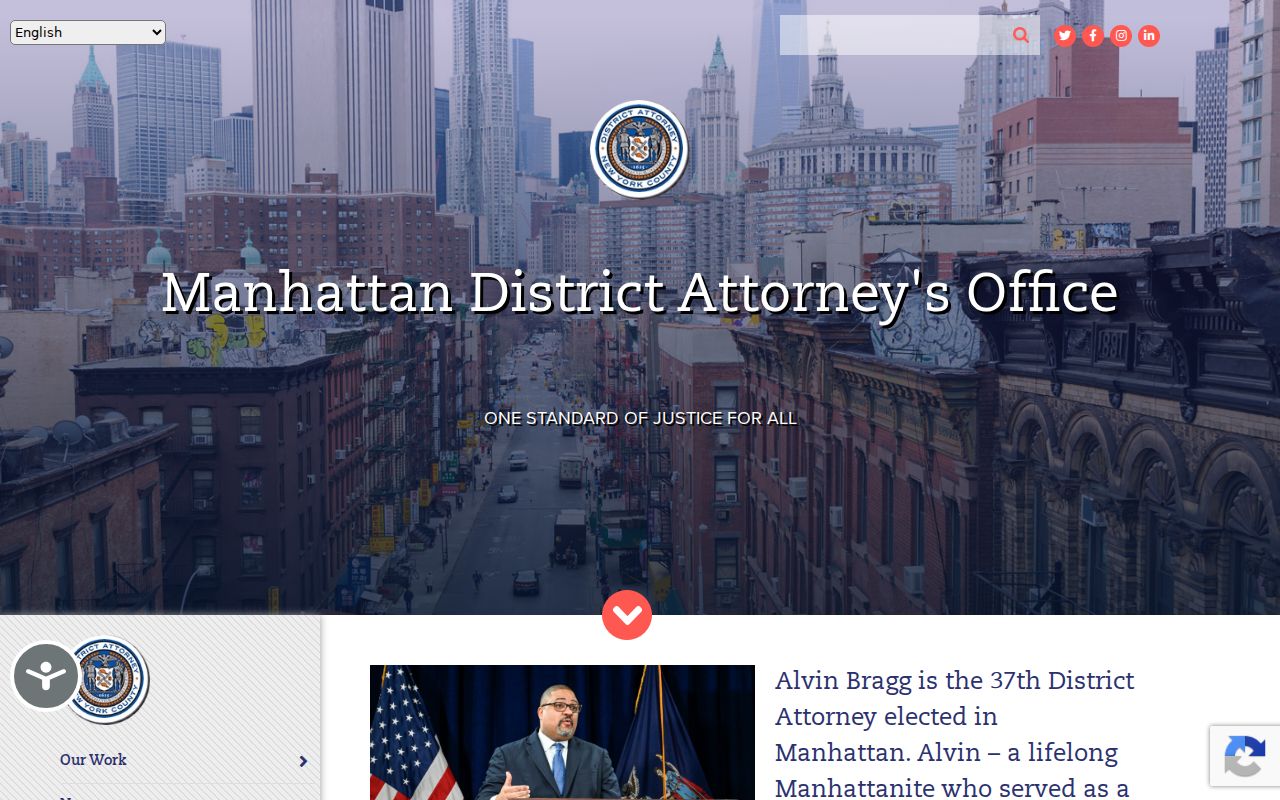
The prosecutor may file or revise charges, while the court docket remains the record of what the judge accepted and how the New York County case moved.
Inside a New York County Case File
A New York County criminal case file organizes the prosecution by docket or indictment. It can show more than a WebCrims calendar entry, but public access still depends on the document and case status. A person studying the outcome should start with the charging instrument, event entries, disposition, and sentence. Those fields reveal what was alleged, what changed, and what the court ultimately decided.
| Case Number & Court | The Criminal Court docket or Supreme Court indictment number, court, county, and status. |
|---|---|
| Charging Document | The complaint, information, or indictment with offense description, statute, class, and count status. |
| Docket Entries | Arraignments, adjournments, motions, hearings, pleas, verdicts, dismissals, and orders. |
| Hearing Dates | The next or past appearance, its purpose, assigned court part, and judge when public. |
| Disposition & Judgment | The outcome for the case and each charge, including plea, verdict, acquittal, or dismissal. |
| Sentence & Conditions | Jail, prison, probation, fine, surcharge, or release information entered in the case record. |
Protected personal identifiers, victim or minor information, grand-jury material, and sealed records stay outside ordinary public review. The complete court file also does not become a police narrative. To trace the arrest record that preceded a case, use the county’s arrest lookup channels separately.
New York County Criminal Clerk Counters
The Central Clerk at 100 Centre Street, Room 1000, keeps finished Supreme Court files from 2014 forward. Staff perform case lookups and handle disposition certificates, filings, certifications, fines, and certain bail tasks. The phone is 646-386-4000. The Ancillary Clerk at 111 Centre Street, Room 927, provides general information, lookups, filings, certifications, and partially secured bail help at 646-386-4300. Supreme Court public hours are 9:00 a.m. to 4:30 p.m.
Supreme Court Central Clerk
100 Centre St., Room 1000
New York, NY 10013
646-386-4000
Finished Supreme files from 2014 forward
Supreme Court Ancillary Clerk
111 Centre St., Room 927
New York, NY 10013
646-386-4300
Lookups, filings, bail help, and certifications
New York City Criminal Court is at 100 Centre Street and routes general calls through 646-386-4500. Call before traveling, especially for an old file. The correct counter depends on whether the matter remains in Criminal Court, became a Supreme Court indictment, or has moved to archives.
The official Supreme Court courtroom directory helps place parts and clerk services.
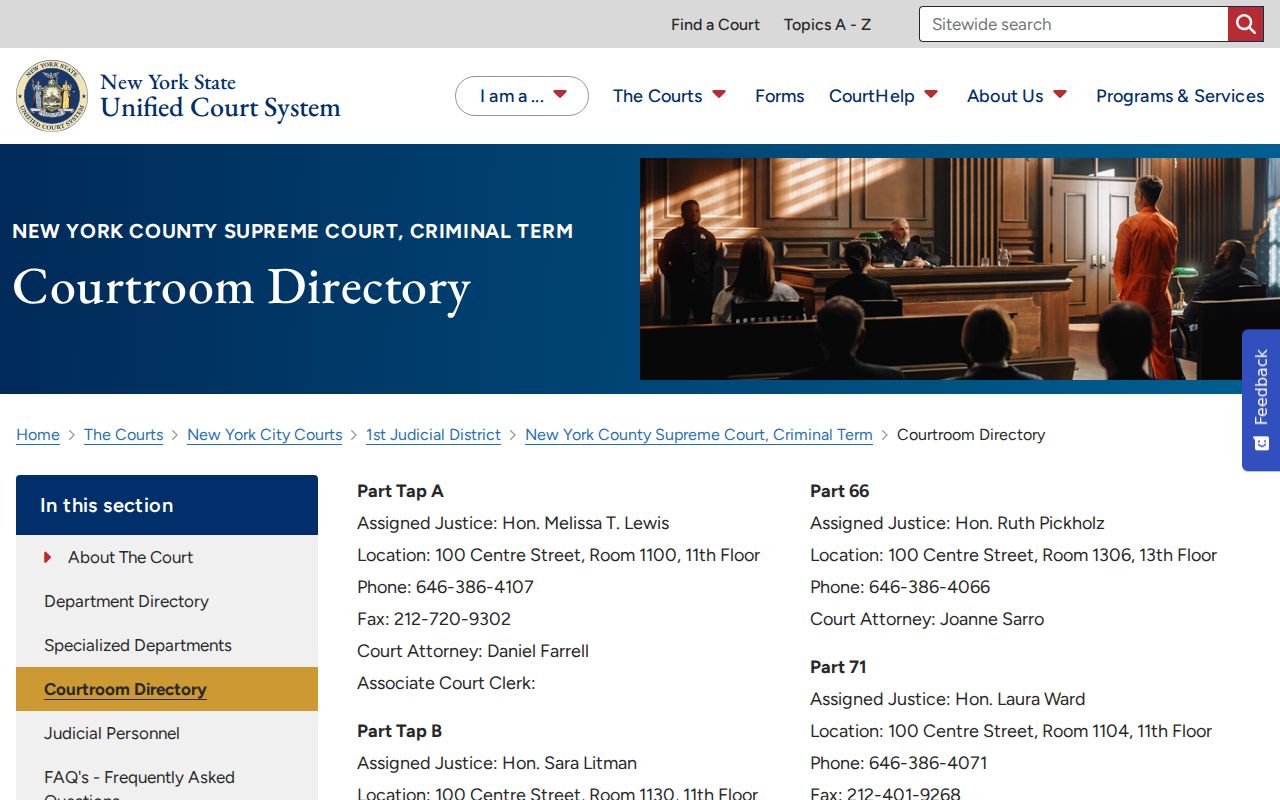
Room and part details connect an online appearance to the correct New York County courtroom instead of sending a visitor to the wrong building.
How a Criminal Case Moves
After charges are filed, arraignment is the first court proceeding where the accusation, rights, and release status are addressed. Pretrial work can include motions, evidence questions, hearings, and adjournments. A plea may resolve the case without trial, subject to court approval. If the case goes to trial, a verdict or acquittal supplies the result. The court then enters a disposition and, after a conviction, a sentence.
New York County felony practice adds the grand jury between the early Criminal Court stage and Supreme Court. A true bill creates an indictment. A no bill means the grand jury declined to indict. These terms explain why a Criminal Court felony complaint is not itself proof that an indicted Supreme Court case followed. Read the latest docket event and disposition instead of drawing a conclusion from the first charge.
New York County CHRS or Certificate
CHRS and a certificate of disposition answer different questions. CHRS searches an exact full name and date of birth across reporting criminal courts. It costs $95 per name and birth-date combination, and each alias or alternate date counts as another search. It can report qualifying public open, pending, and conviction matters. CHRS excludes sealed cases and several other categories, and its result is not certified proof of a New York County disposition.
Direct Access runs around the clock through an account and card payment. A no-result may return at once, while a result is held for staff review and normally emailed the next business day. Mail requests go to the CHRS Unit, 25 Beaver Street, Room 940, New York, NY 10004, with a check or money order and a self-addressed stamped envelope. The unit does not offer in-person service. Mail requests are processed on the next business day after receipt, subject to review.
A certificate of disposition comes only from the original court. It states the official outcome for a specific case. Use it when the precise charge and result matter, or when a state record appears to lack the outcome. Supreme Central Clerk handles certificates for its files. For an older New York County case, ask the clerk where the archive is held before visiting. A CHRS no-result should not be read as proof that no record ever existed because exact matching and exclusion rules can affect the response.
Note: New York City court data generally refresh each day, so a same-day disposition may not appear in a public search yet.
Reading New York County Court Terms
A few local terms make New York County criminal case records much easier to read. The identifier and status show where the case sits, while the part and appearance purpose point to the next court event.
- Docket number
- The case identifier used for a Criminal Court matter.
- Indictment number
- The Supreme Court identifier assigned after a grand jury indictment.
- Court part
- The assigned courtroom or calendar unit shown in WebCrims and lobby lists.
- Disposition
- The result or status that ends a charge or case.
- Certificate of disposition
- The original court’s certified statement of the case outcome.
An adjournment merely moves a matter to another date. A bench warrant can issue when someone fails to appear or comply, but the clerk should confirm current status. These labels are more useful than a bare arrest charge because they show how the New York County prosecution changed in court.
Case Record Access & Restrictions
New York court files are generally public, but access is not absolute. Judiciary Law §255 directs clerks to search and certify court records subject to lawful restrictions and fees. WebCrims offers limited pending information, CHRS supplies a defined public history product, and the clerk controls inspection and copies from the file. A request for an agency record outside the court may instead fall under the New York Freedom of Information Law.
Sealed matters, youthful-offender records, grand-jury proceedings, and protected victim, minor, or personal data are outside routine public access. CPL 160.50 generally seals records after a favorable termination. Online omission may therefore reflect a legal restriction rather than a broken search. It may also reflect age, timing, a spelling mismatch, or movement between Criminal and Supreme Court.
Choose the source by need: use WebCrims for a coming appearance, CHRS for defined statewide public history, and the original New York County clerk for file detail or certified proof.